
It was 12 years ago when a Labour politician first warned me that the party should be as alive to the electoral threat posed by the Green Party as it was to that posed by the Faragist right.
I remember how the candidate in question, new to politics, sat on the edge of his seat and glanced nervously at my Dictaphone. He spoke a little awkwardly and formally, but earnestly, about how, yes, Labour was facing the rise of Nigel Farage’s Ukip – which won the UK’s European parliament elections that year – but that the Greens were also ones to watch out for.
“Given the political instability at the moment, due on one hand to Ukip and to other parties like the Greens, there is a real election to be won and to be fought,” he warned. “The political compass is a little harder to read.”
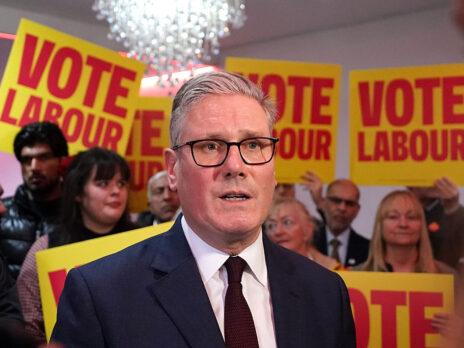
His failure to read that compass, it turns out, has landed Labour in its latest political mess. That interview was the first time I met Keir Starmer, still a barrister at his chambers, when he was running to become Labour’s candidate in Holborn and St Pancras. The Green Party’s then leader, Natalie Bennett, was campaigning in the seat. Even back then, he could see the Greens’ appeal up close.

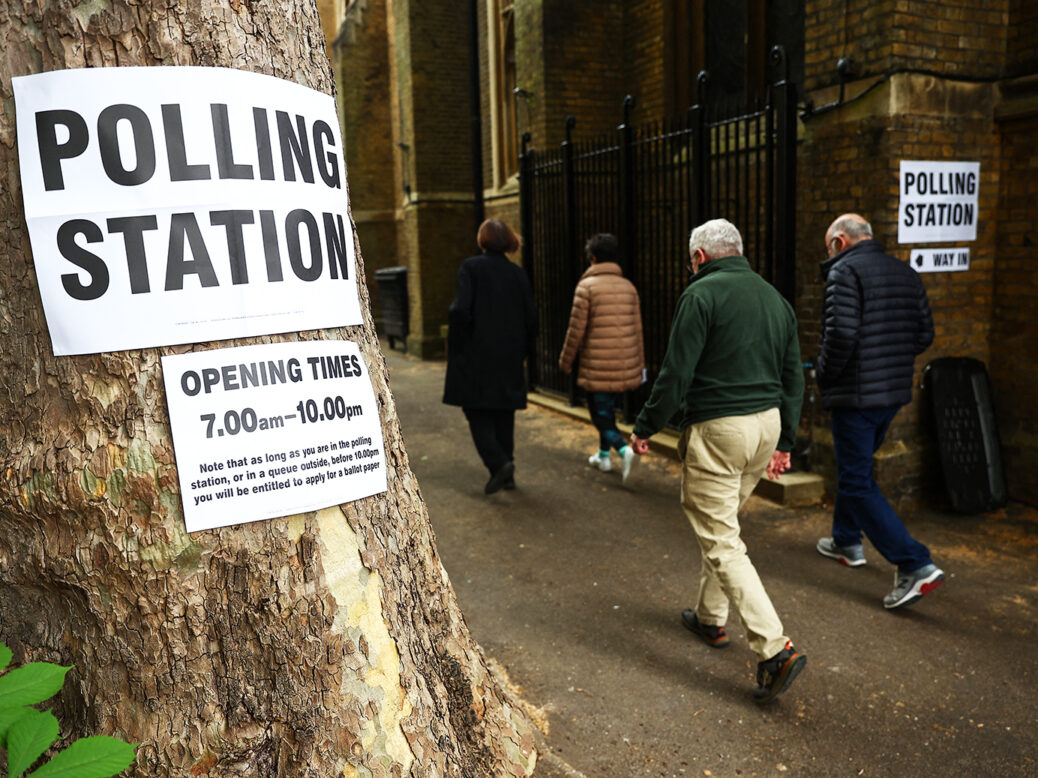
Fast-forward to the 2026 local elections and Labour only just clung on in its stronghold of Camden Council – the borough overlapping with Starmer’s constituency – losing 16 seats while the Greens gained 11. The story across London was similar, with the Greens winning their first three London councils, and their first directly elected mayor.
Reform’s success across Britain was a bigger story, of course. But it overshadowed an inconvenient pattern for Labour strategists hitherto fixated on Nigel Farage’s party – in so many cases, Labour lost seats to Reform because they lost votes to the Greens. Labour has suffered a heavier loss to progressive parties than to Reform, and the small section who have peeled off from Labour to Reform are far less likely to reconsider Labour than the “progressive defectors”, according to new post-local-election voting analysis shared exclusively with me by Persuasion UK, a research firm.
When I first interviewed Starmer in 2014, it felt like the year the Labour Party truly woke up to its identity crisis. As Ukip made gains, and Emily Thornberry was sacked from the front benches after being accused of sneering at a white van and St George’s flag on the campaign trail, Labour MPs were warning about capture by a “metropolitan elite” and neglect of “rugby league towns”.
This was the beginning of the fall of the Red Wall: the loss of post-industrial, so-called left-behind places that had been traditional Labour heartlands. Then came the “Scot-pocalypse” in 2015, when Ed Miliband’s Labour lost 40 seats in Scotland and was left with just one. Another stronghold no longer held.
The voices warning that Labour was taking a whole other set of voters for granted, in London and other English inner-cities, were quieter. But they were there. I remember one Labour politician, now a prominent minister, warning privately a few years ago that London risked becoming “the next Red Wall”. The party, panicked by the Brexit vote and symbolic losses across the north and Midlands, had assumed young liberals and ethnic minorities and middle-class graduates had “nowhere else to go”. Now, that calculation looks like yet more complacency.
Sadiq Khan, Labour’s mayor of London who has just reached a decade in office, had also been warning privately that the capital might be the next wall to fall. When I met him on 11 May, as Starmer was fighting for his political life following the local election results, Khan told me this analysis had been “spot on”.
Watching Labour seats in London, and the rest of the country, fall to the Greens and other parties was like watching a “slow-motion car crash happening – you could see in advance what was going to happen, it was like one of those Hollywood movies where you could tell the future”. Years ago, Khan noticed the “arrogance in some Scottish Labour MPs, who took the vote for granted” and the “complacency that Scotland will always be Labour”. The same, he realised once he began fighting elections in the capital, could always happen in London.
Labour must ask itself why it grows so neglectful, and even contemptuous, of voters it assumes are guaranteed. But there is a more immediate strategic question here, too. What should it do to signal to those disillusioned progressive and liberal switchers that it is still the party for them?
There is a live debate within the party of whether it should signal its left-wing values to try to stop the haemorrhage of voters to its left, or avoid scaring off further swathes of the country to the protest right. Khan revealed that he had been complaining privately to Labour’s top team that “there appears to be an obsession with this ‘hero voter’” – those socially conservative once-Labour supporters who backed Brexit, voted Tory in 2019 and are now turning to Reform. “There’s always been a strategy to win one set of voters at the expense of another,” he told me. “That’s wrong, I think. And the chicks have come home to roost.”
Keir Starmer, as a London politician with similar instincts, once knew this. But that “real election to be won and to be fought” he warned me about all those years ago has already been lost.
[Further reading: Sadiq Khan on Keir Starmer: “Ten years is not realistic”]
Content from our partners


Related
This article appears in the 13 May 2026 issue of the New Statesman, Never-Ending Chaos
Join the debate
Subscribe here to comment